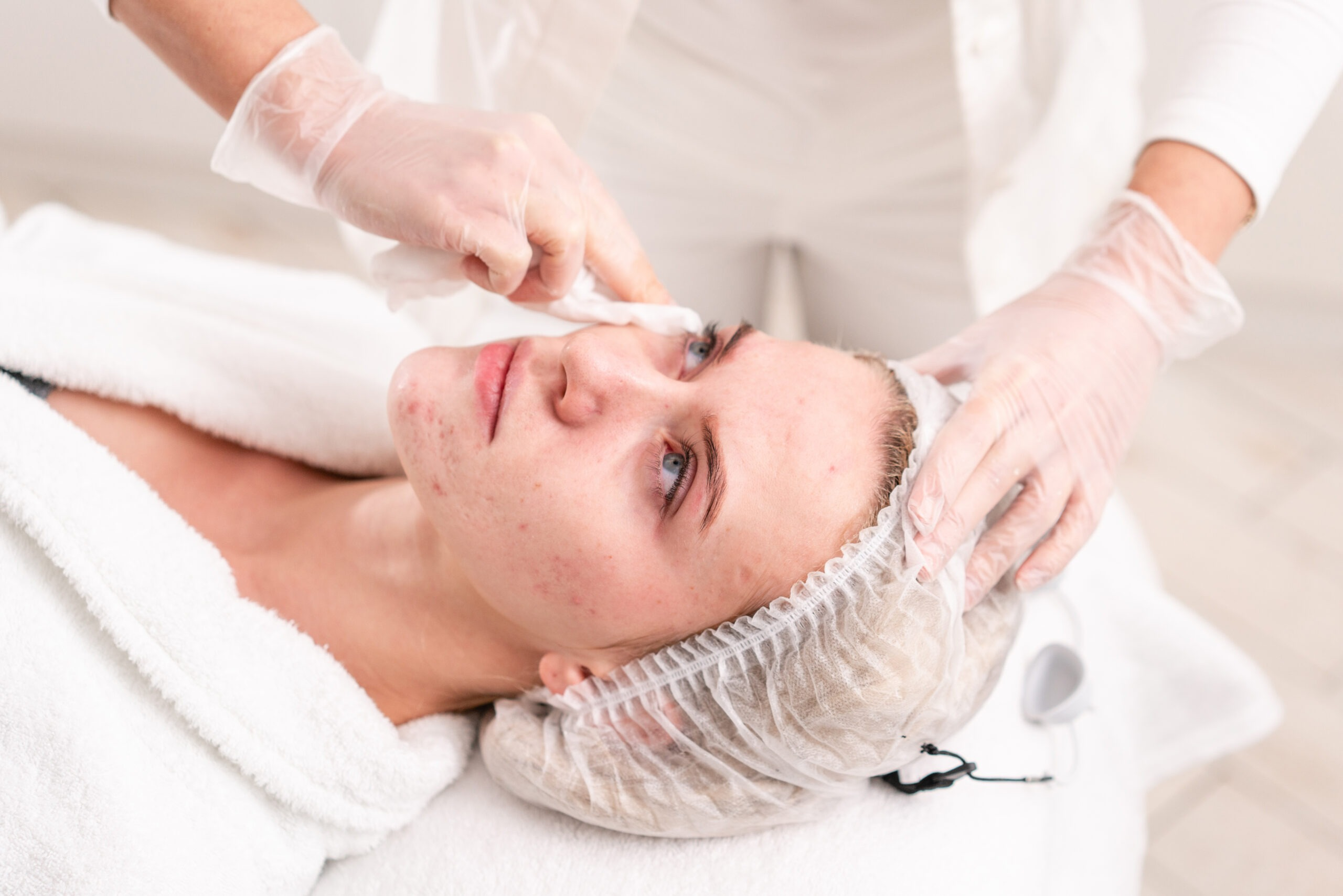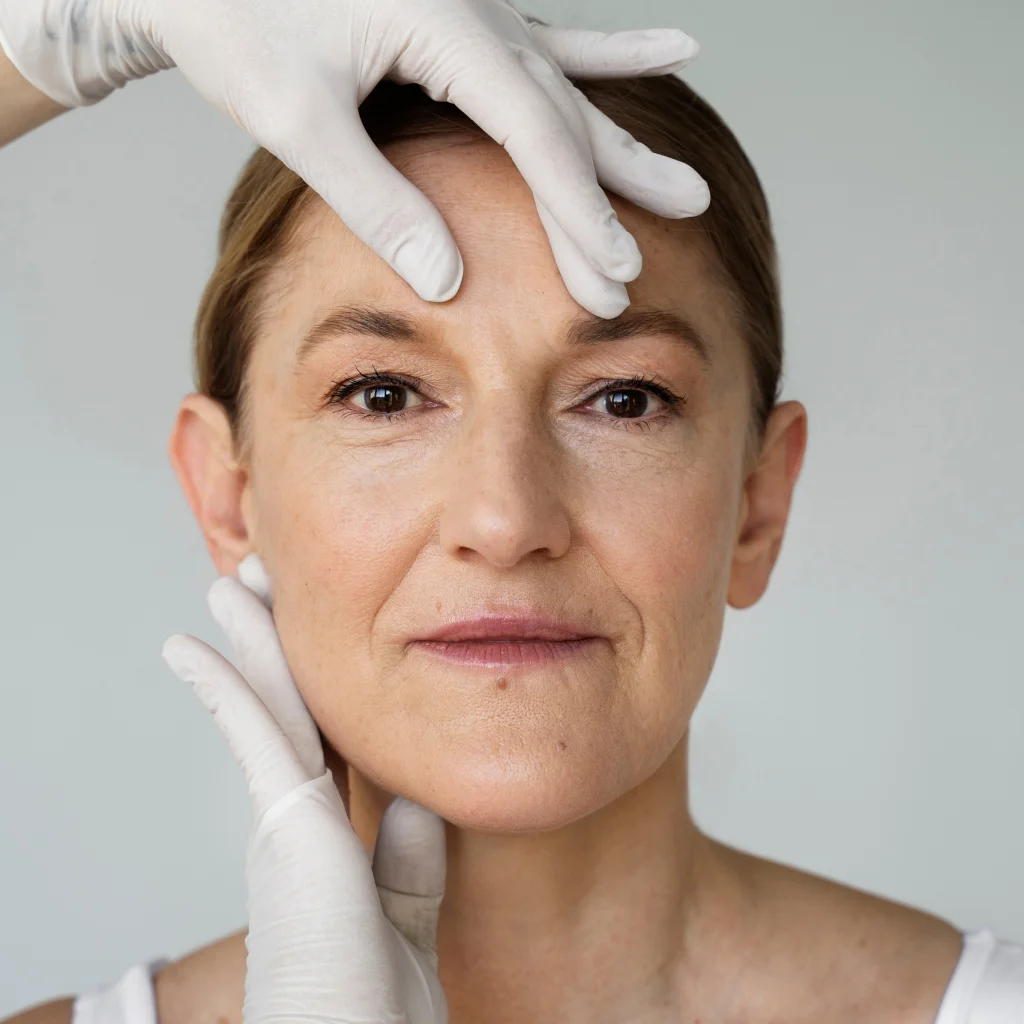

Choosing the right sunscreen can feel overwhelming, but finding the right one doesn't have to be. Fortunately, the basics are simple. Choose a broad-spectrum sunscreen with SPF 30 or higher, apply enough to cover all exposed skin, and reapply regularly during continued outdoor exposure. The best sunscreen is the one you'll use consistently as part …
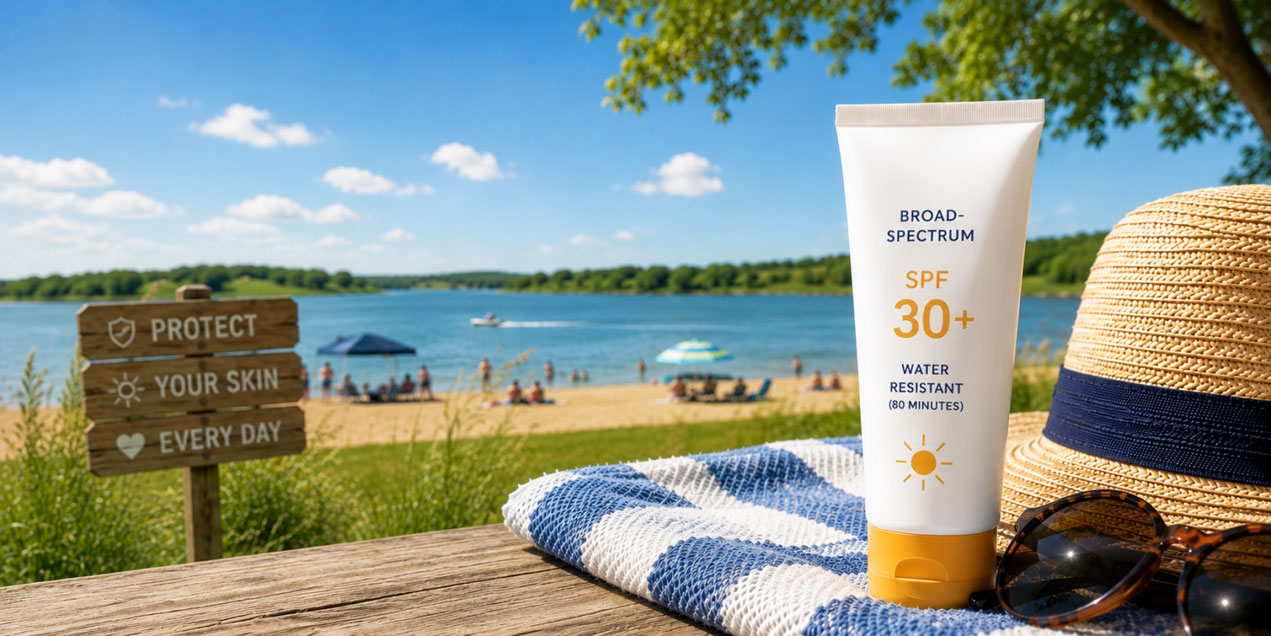
Choosing the right sunscreen can feel overwhelming, but finding the right one doesn’t have to be. Fortunately, the basics are simple. Choose a broad-spectrum sunscreen with SPF 30 or higher, apply enough to cover all exposed skin, and reapply regularly during continued outdoor exposure. The best sunscreen is the one you’ll use consistently as part of your daily routine.
At Elkhorn Dermatology, we encourage patients throughout Omaha, Elkhorn, Gretna, Bennington, Waterloo, Valley, Fremont, and surrounding Nebraska communities to think of sunscreen as an everyday part of skin health, not something reserved only for vacations, pool days, or trips to the lake. Consistent sun protection is one of the simplest and most effective ways to help reduce cumulative UV damage and support long-term skin health.
Medically Reviewed By
Margaret Matveyev, MSN, APRN, FNP-C
Clinical Director & Dermatology Provider
Elkhorn Dermatology
This article has been medically reviewed for medical accuracy and reflects current evidence-based dermatology recommendations and sun protection guidelines.
Last Updated: July 2026
In This Guide
What to Look for in a Sunscreen
Why Daily Sun Protection Matters
Sun Protection Tips for Omaha & Nebraska
What Does SPF Mean
Mineral vs. Chemical vs. Tinted Sunscreen
How to Choose the Right Sunscreen for Your Skin
How Much Sunscreen Should You Apply?
Areas People Commonly Miss
Common Sunscreen Mistakes to Avoid
Frequently Asked Questions About Sunscreen
Key Takeaways
What Should You Look for in a Sunscreen?
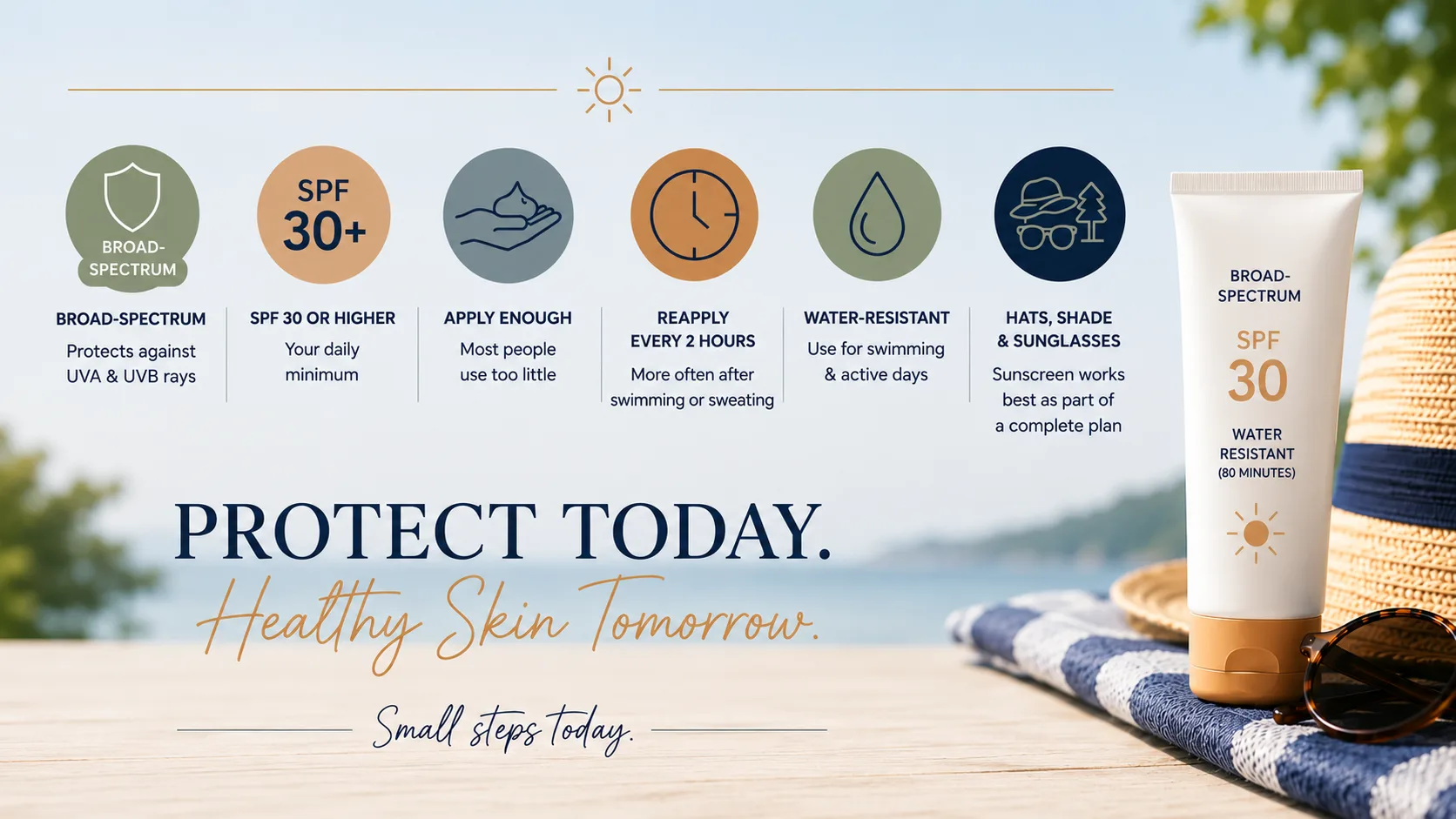
Choose a broad-spectrum sunscreen with SPF 30 or higher that you’ll use every day. Select a water-resistant formula for swimming, sports, or sweating, apply enough to cover exposed skin, and reapply at least every two hours while outdoors.
- Broad-spectrum protection
Protects against both UVA and UVB rays.
- Broad-spectrum protection
- SPF 30 or higher
Recommended for everyday use.
- SPF 30 or higher
- Water-resistant when needed
Helpful for swimming and sweating.
- Water-resistant when needed
- A formula that works for your skin
Choose one you’ll wear consistently.
- A formula that works for your skin
- Generous application and regular reapplication
Use enough sunscreen to cover all exposed skin and reapply every two hours outdoors.
- Generous application and regular reapplication
Looking for a sunscreen that meets these recommendations? Explore our curated collection of professional-grade sun protection products from Valeriya Life Skincare, carefully selected by our team to provide broad-spectrum protection for a variety of skin types and everyday use.
Why Daily Sun Protection Matters
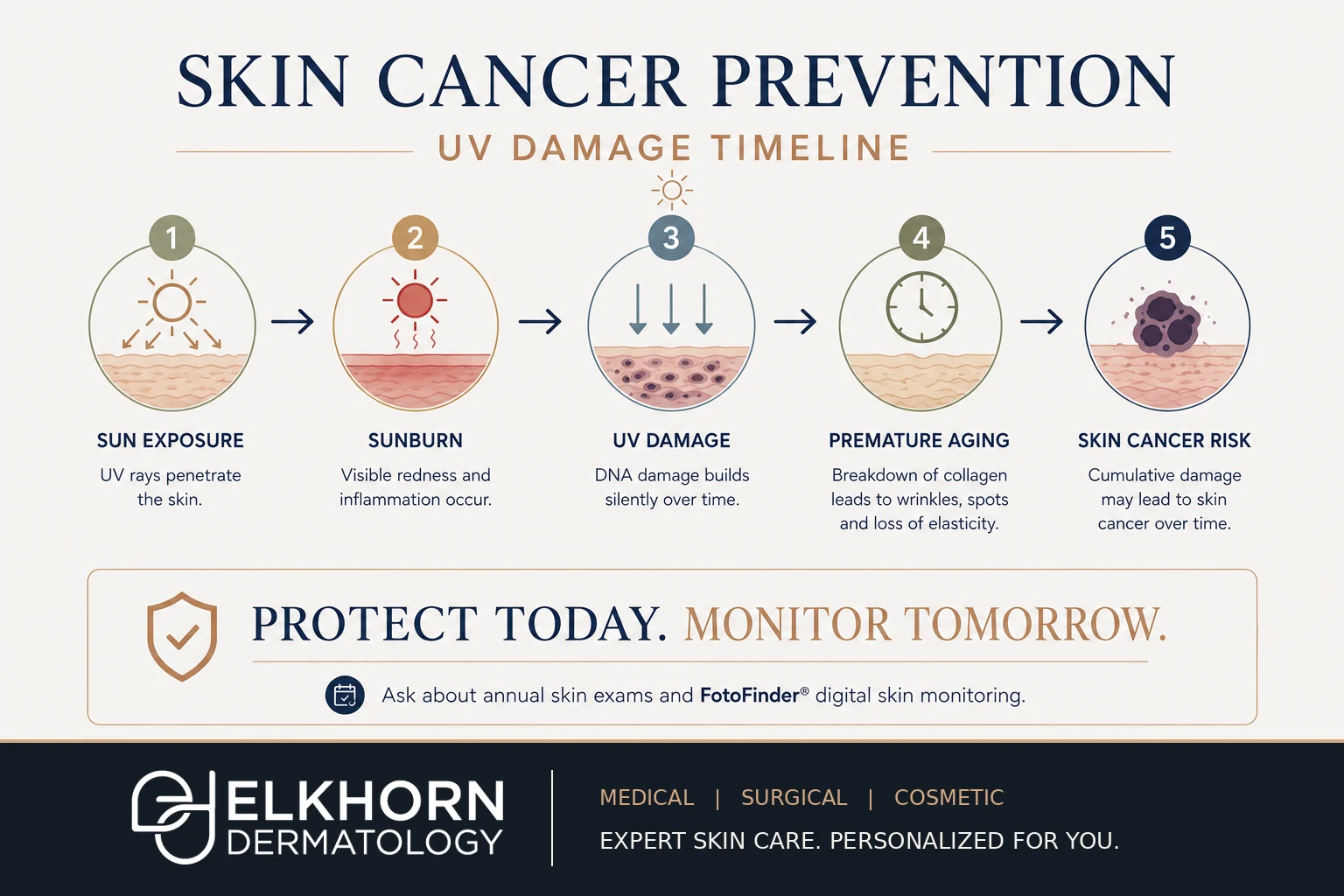
Sunscreen does more than help prevent sunburn. Repeated exposure to ultraviolet (UV) radiation contributes to premature skin aging, uneven pigmentation, actinic keratoses, and skin cancer. Because UV damage accumulates over time, protecting your skin every day is one of the most effective ways to support long-term skin health.
Many people associate sunscreen with vacations or summer activities, but UV exposure occurs during everyday moments like driving, walking the dog, gardening, attending outdoor events, or exercising outside. Even on cloudy days, ultraviolet rays can still reach your skin.
Daily sunscreen use works best alongside other sun-protection habits, including wearing protective clothing, seeking shade when possible, and scheduling prolonged outdoor activities outside the strongest sunlight hours.
Sun Protection Tips for Omaha & Nebraska
Living in Omaha and throughout Nebraska, UV exposure isn’t limited to vacations or trips to the beach. Whether you’re spending the weekend at the lake, attending a sporting event, gardening, golfing, hiking, or enjoying a local festival, ultraviolet rays can add up quickly, even on cooler or cloudy days. Making sunscreen part of your daily routine helps protect your skin during the outdoor activities that Nebraska families enjoy throughout the year.
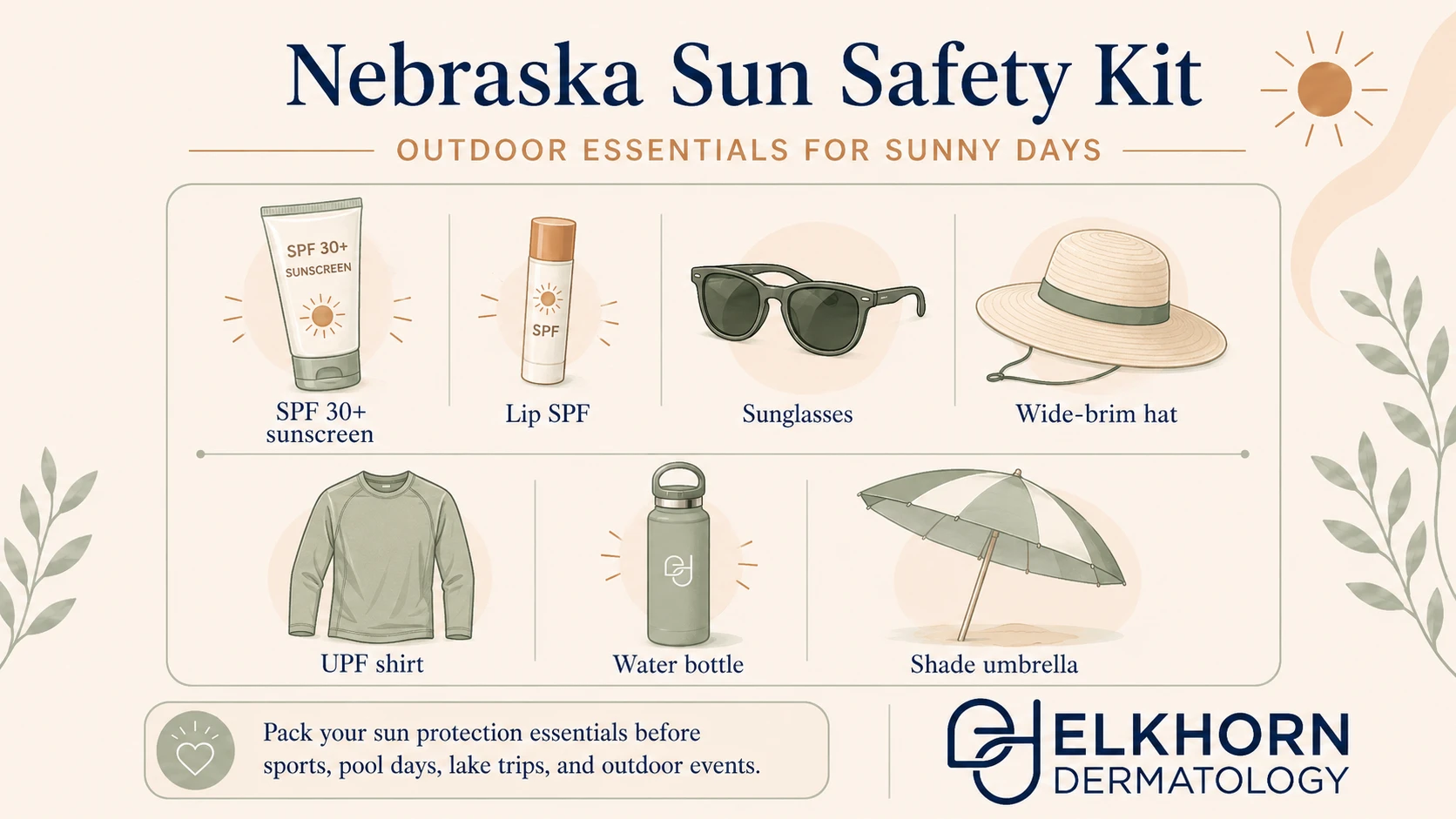
Packing these essentials before heading outdoors can help make daily sun protection easier and more consistent.
What Does SPF Mean?
SPF stands for Sun Protection Factor. It measures how well a sunscreen helps protect your skin from UVB rays, the ultraviolet rays primarily responsible for sunburn. However, SPF is only one part of choosing an effective sunscreen. Broad-spectrum protection is equally important because it helps protect against both UVA and UVB rays. While UVB rays are the primary cause of sunburn, UVA rays penetrate deeper into the skin and contribute to premature skin aging while also increasing the risk of skin cancer.
How much SPF do you need? For most adults, dermatologists recommend choosing a broad-spectrum sunscreen with SPF 30 or higher for everyday use. While SPF 50 offers slightly more UVB protection than SPF 30, no sunscreen blocks 100% of ultraviolet rays. Consistent daily use, applying enough sunscreen, and reapplying it throughout the day have a much greater impact than simply choosing the highest SPF available.
Did You Know?
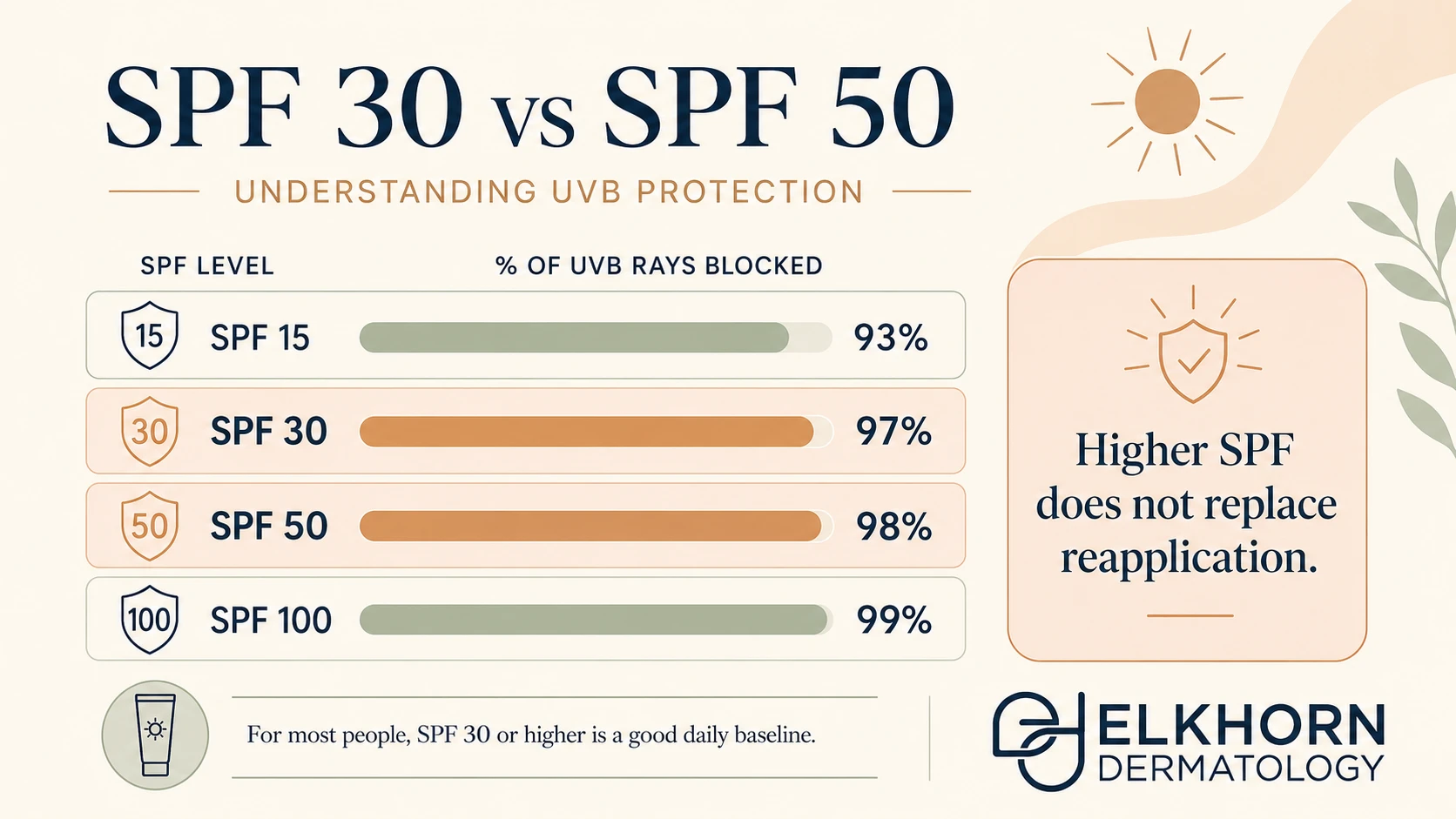
Remember that even the best sunscreen can only provide its labeled protection when it is applied generously, allowed to absorb before sun exposure, and reapplied regularly. Whether you choose SPF 30 or SPF 50, proper application and consistent reapplication are far more important than selecting the highest SPF available.
💡 Quick Tip
No sunscreen blocks 100% of the sun’s UV rays. While higher SPF products provide slightly more UVB protection, proper application and reapplication every two hours during continued outdoor exposure have a much greater impact on your overall protection than choosing SPF 100 instead of SPF 30.
Mineral vs. Chemical vs. Tinted Sunscreen: What’s the Difference?
Choosing between mineral and chemical sunscreen doesn’t have to be confusing. Both types are safe and effective when used correctly, and both can provide excellent broad-spectrum protection. The best sunscreen is the one you’ll apply consistently every day.
Mineral sunscreens
Mineral sunscreens contain active ingredients such as zinc oxide and titanium dioxide that sit on the skin’s surface and primarily reflect and scatter ultraviolet rays. They begin working immediately after application and are often recommended for people with sensitive skin or for young children.
Chemical Sunscreens
Chemical sunscreens contain ingredients that absorb ultraviolet rays before they can damage the skin. These formulas are often lighter, spread more easily, and may leave less visible residue on the skin, making them a popular choice for daily wear.
Tinted Sunscreens
Tinted sunscreens contain mineral or chemical UV filters along with iron oxides that help protect against visible light. They are often recommended for people with melasma, post-inflammatory hyperpigmentation, or other pigment concerns because visible light can contribute to worsening discoloration. Many tinted formulas also provide a more natural cosmetic finish by blending more easily with different skin tones.
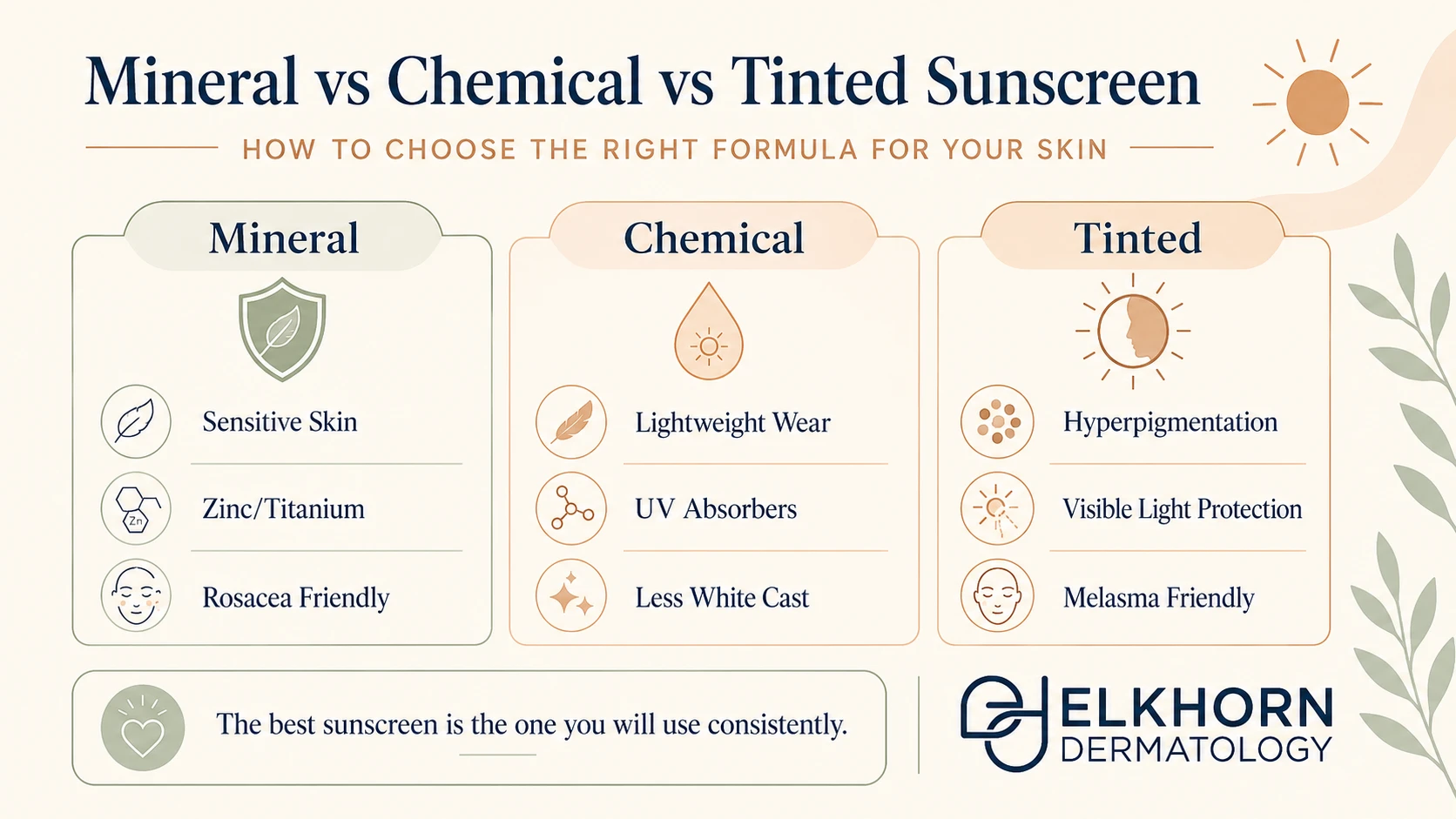
Both mineral and chemical sunscreens can provide excellent protection when used correctly. The best choice depends on your skin type, lifestyle, cosmetic preferences, and which formula you’ll be most likely to apply consistently every day.
How to Choose the Right Sunscreen for Your Skin
Not every sunscreen is the right fit for every person. Skin type, daily activities, lifestyle, and personal preference all influence which product you’ll be most likely to wear consistently. The best sunscreen is one that provides broad-spectrum protection, feels comfortable on your skin, and is easy enough to use every day.
For Oily or Acne-Prone Skin
Look for lightweight, oil-free, or non-comedogenic sunscreen formulas that won’t clog pores. Gel, fluid, and matte-finish sunscreens often feel more comfortable for oily skin and can help reduce excess shine throughout the day.
For Dry Skin
People with dry skin often benefit from moisturizing sunscreen formulations that contain ingredients such as hyaluronic acid, ceramides, or glycerin. Cream-based sunscreens can help support the skin barrier while providing daily UV protection.
For Sensitive Skin
If your skin is easily irritated, choose fragrance-free sunscreens designed for sensitive skin. Mineral sunscreens containing zinc oxide or titanium dioxide are often well tolerated and may be less likely to cause irritation.
For Outdoor Activities
When swimming, exercising, or spending extended time outdoors, select a water-resistant broad-spectrum sunscreen with SPF 30 or higher. Reapply every two hours, and sooner after swimming, sweating, or towel drying.
No matter which formulation you choose, sunscreen only works when it is applied consistently and in sufficient amounts. Daily sunscreen use is especially important if you’re prone to hyperpigmentation, as it helps prevent existing dark spots from becoming darker and may help reduce the development of future discoloration. The best sunscreen is the one you’ll wear correctly every day.
How Much Sunscreen Should You Apply and When Should You Reapply?
Applying the right amount of sunscreen is just as important as choosing the right SPF. Even the best sunscreen cannot provide its labeled level of protection if too little is applied. Most people use significantly less sunscreen than recommended, reducing the protection they receive.
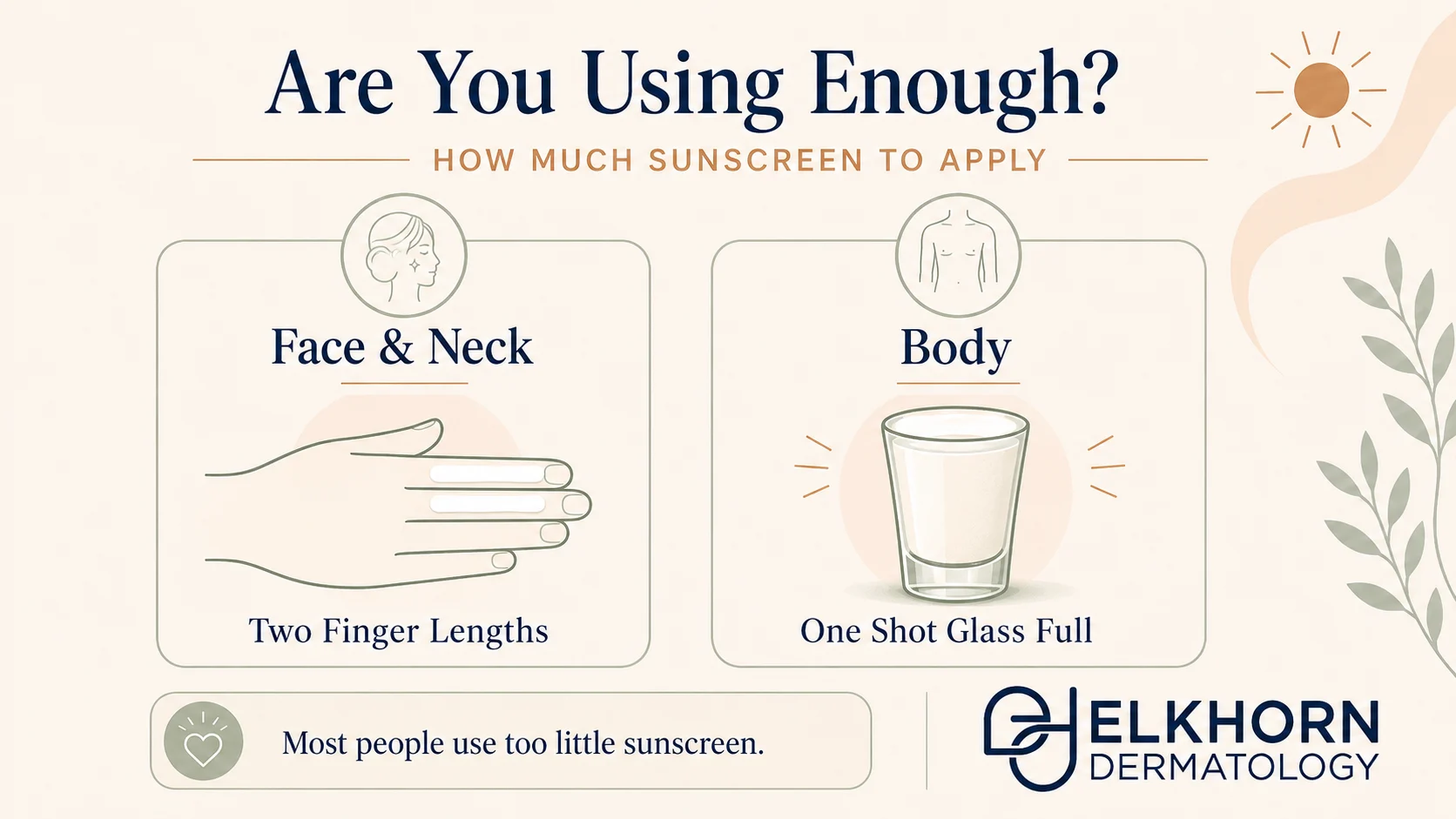
For most adults, use approximately one ounce (about a shot glass full) of sunscreen to cover the entire body. For the face, ears, and neck, applying two finger lengths of sunscreen is a simple way to estimate the right amount for daily use.
Apply sunscreen 15 minutes before going outdoors whenever possible. Although mineral sunscreens begin protecting immediately after application, applying sunscreen before sun exposure helps ensure more even coverage and gives you time to cover commonly missed areas.
Reapply sunscreen at least every two hours during continued outdoor exposure, and immediately after swimming, heavy sweating, or towel drying, even when using a water-resistant sunscreen. No sunscreen remains fully effective all day, and consistent reapplication is one of the most important habits for protecting your skin.
Areas People Commonly Miss
Certain areas are easy to overlook during sunscreen application but are also among the most common places where sun damage develops.
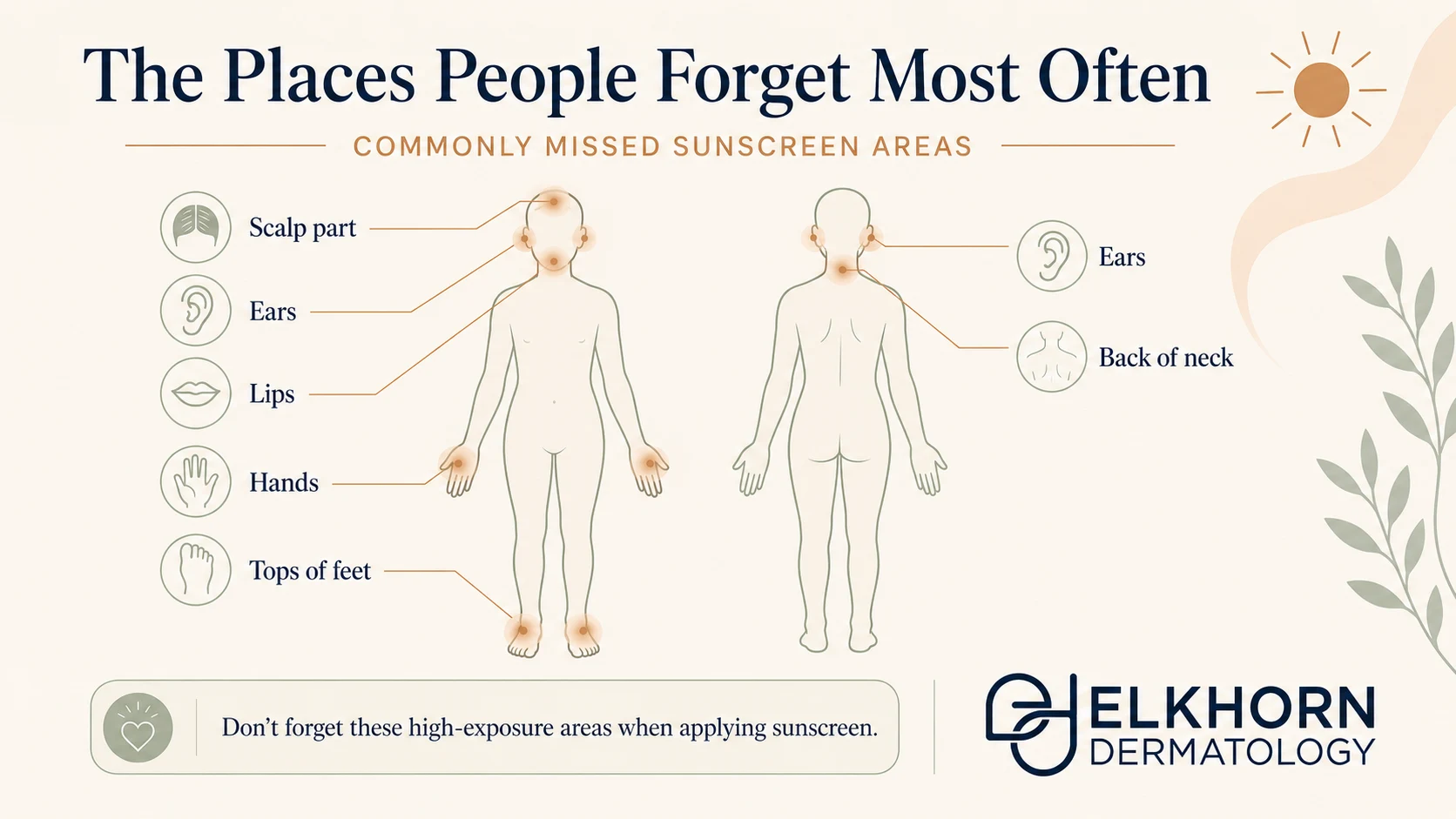
Don’t forget to protect the delicate skin around the eyes with sunscreen formulated for that area, and wear UV-protective sunglasses whenever possible.
Developing a daily sunscreen routine is often more important than choosing the highest SPF. Applying enough sunscreen, covering commonly missed areas, and reapplying consistently provide far greater protection than relying on SPF alone.
Common Sunscreen Mistakes to Avoid
Even people who wear sunscreen regularly can make simple mistakes that reduce its effectiveness. Avoiding these common habits can help you get the full benefit of daily sun protection.
Not Applying Enough Sunscreen
Most people apply far less sunscreen than recommended. Using too little significantly reduces the level of protection listed on the label.
Skipping Reapplication
Reapply every two hours during outdoor exposure and after swimming, sweating, or towel drying, even when using water-resistant sunscreen.
Only Applying Sunscreen on Sunny Days
Up to 80% of ultraviolet rays can penetrate clouds, making sunscreen important even on overcast days.
Missing Commonly Forgotten Areas
Don’t forget the ears, neck, scalp part, lips, hands, and tops of the feet.
Relying on Sunscreen Alone
Sunscreen works best when combined with hats, sunglasses, protective clothing, and seeking shade during peak sunlight hours.
Frequently Asked Questions About Sunscreen
What SPF sunscreen should I use every day?
Dermatologists generally recommend using a broad-spectrum sunscreen with SPF 30 or higher for daily protection. SPF 30 blocks approximately 97% of UVB rays, while SPF 50 blocks about 98%. Choosing a sunscreen you’ll apply consistently and reapply as directed is more important than selecting the highest SPF available.
Do I need sunscreen if it’s cloudy?
Yes. Up to 80% of ultraviolet (UV) rays can penetrate clouds, meaning your skin is still exposed even on overcast days. Wearing sunscreen every day helps protect against cumulative sun damage and lowers your risk of premature aging and skin cancer.
Should I wear sunscreen indoors?
If you spend time near large windows or drive frequently, wearing sunscreen indoors is still recommended. UVA rays can penetrate glass, contributing to skin aging and long-term sun damage.
How often should I reapply sunscreen?
Reapply sunscreen at least every two hours during outdoor activities and immediately after swimming, sweating, or towel drying. Even water-resistant sunscreens lose effectiveness over time, making regular reapplication essential.
Does sunscreen expire?
Yes. Most sunscreens remain effective for about three years, although you should always check the expiration date. Replace sunscreen that has expired or has been exposed to excessive heat, such as being left in a hot vehicle.
What’s the difference between SPF 30 and SPF 50?
SPF 30 filters approximately 97% of UVB rays, while SPF 50 filters about 98%. No sunscreen blocks 100% of ultraviolet radiation, so proper application, using enough sunscreen, and reapplying regularly are much more important than choosing the highest SPF available.
Can people with darker skin tones get skin cancer?
Yes. Although darker skin contains more melanin, people of every skin tone can develop skin cancer, including melanoma. Regular self-examinations and skin cancer screenings remain important for early detection.
When should I schedule a skin cancer screening?
If you notice a changing mole, have a personal or family history of skin cancer, spend significant time outdoors, or simply want peace of mind, scheduling a professional skin examination is recommended. At Elkhorn Dermatology, we provide comprehensive skin cancer screenings and digital mole monitoring for patients throughout Omaha, Elkhorn, Gretna, Bennington, Waterloo, Valley, Fremont, and surrounding Nebraska communities.
Key Takeaways
Protecting your skin doesn’t have to be complicated. Choose a broad-spectrum sunscreen with SPF 30 or higher, apply enough to cover all exposed skin, reapply regularly, and wear it every day—not just during the summer. Consistent sun protection is one of the most effective ways to reduce premature skin aging and lower your risk of skin cancer.
Medical Information Disclaimer
This article is intended for educational purposes only and should not replace personalized medical advice, diagnosis, or treatment. If you notice a changing mole, a non-healing sore, or any other concerning skin lesion, schedule a professional skin cancer screening with a qualified dermatology provider. If you have questions about choosing the right sunscreen for your skin, your medical history, or a specific skin condition, consult your healthcare provider.
Medical References
- American Academy of Dermatology Association. How to Select and Apply Sunscreen.
- American Academy of Dermatology Association. Sunscreen FAQs.
- U.S. Food and Drug Administration (FDA). Sunscreen: How to Help Protect Your Skin from the Sun.
- The Skin Cancer Foundation. Prevention Guidelines.
- Centers for Disease Control and Prevention (CDC). Sun Safety.
Protect Your Skin with Expert Care
Daily sunscreen is one of the most effective ways to help reduce UV damage and lower your risk of developing skin cancer. Even with consistent sun protection, regular skin cancer screenings remain one of the best ways to detect suspicious moles and skin cancer early, when treatment is often simpler and more successful.
Schedule a comprehensive skin cancer screening at Elkhorn Dermatology to receive a thorough skin examination, personalized sun protection recommendations, and expert evaluation of any concerning moles or skin changes.
Healthy skin is built through small, consistent habits practiced every day. Wearing sunscreen daily, performing regular self-skin checks, and scheduling routine skin cancer screenings are some of the most effective steps you can take to protect your skin for years to come.
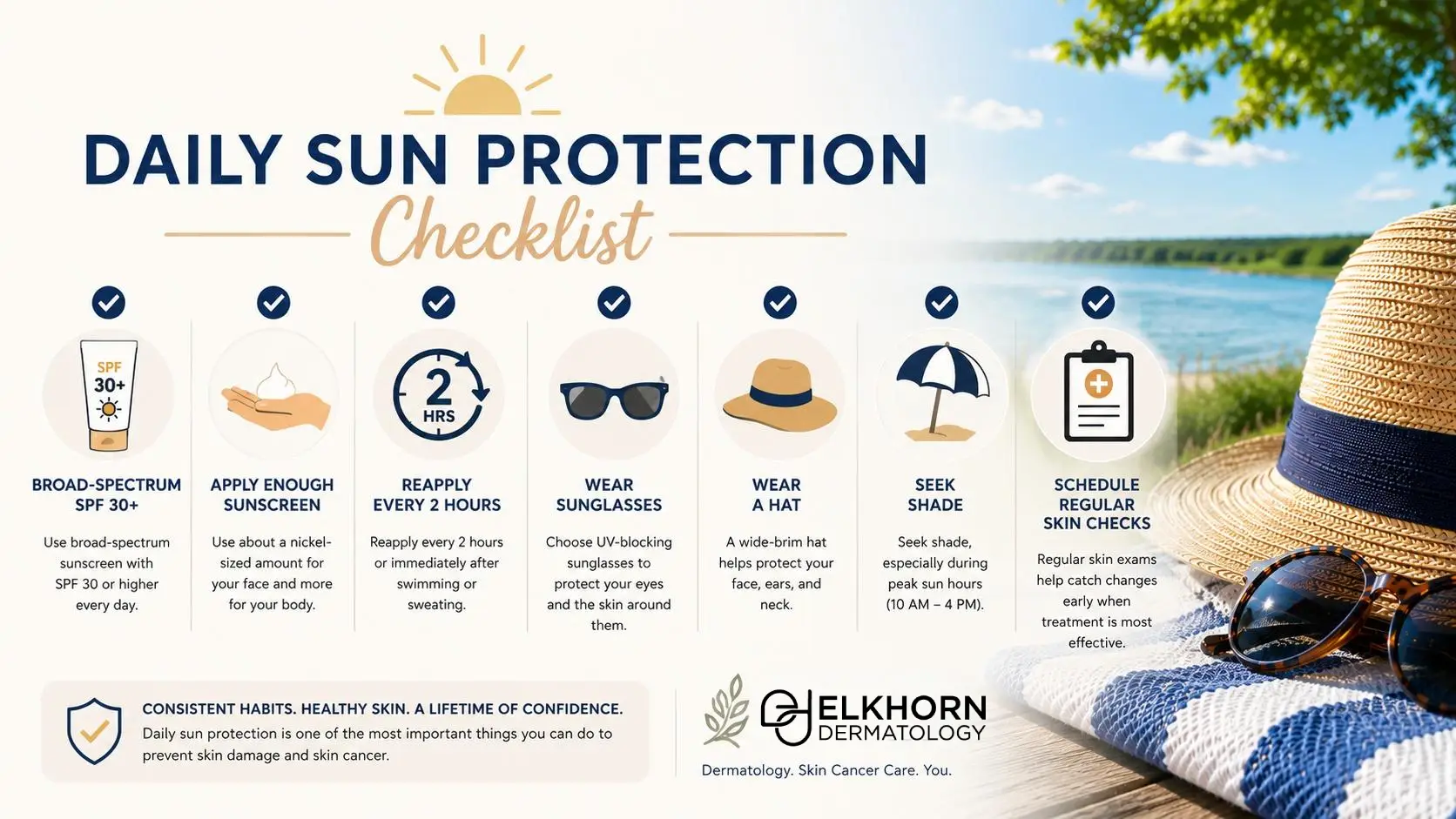
Daily sun protection doesn’t have to be complicated. Following these simple habits consistently can help reduce sun damage, slow premature skin aging, and lower your risk of skin cancer throughout the year.
Healthy skin starts with daily sun protection.