
At Elkhorn Dermatology, we provide comprehensive skin cancer care for patients throughout Omaha, Elkhorn, Gretna, Bennington, Waterloo, Valley, Fremont, and surrounding Nebraska communities. Whether you are scheduling a preventive skin cancer screening, concerned about changing mole, need a skin biopsy, or require follow-up after treatment, our team provides personalized evaluation, diagnosis, selected in-office treatment, specialty referral coordination, and ongoing skin cancer surveillance.
Skin cancer is the most common cancer in the United States and is a significant health concern in Nebraska, where many residents spend time outdoors year-round. The most common types are basal cell carcinoma, squamous cell carcinoma, and melanoma. Early detection is important because treatment is often simpler and more effective before cancer grows or spreads. Melanoma should be identified promptly due to its greater potential to spread.
Schedule a skin evaluation if you notice a new or changing spot, a mole that looks different from your others, or a lesion that itches, bleeds, crusts, grows, or does not heal. While these changes are not always cancer, they should be professionally evaluated.
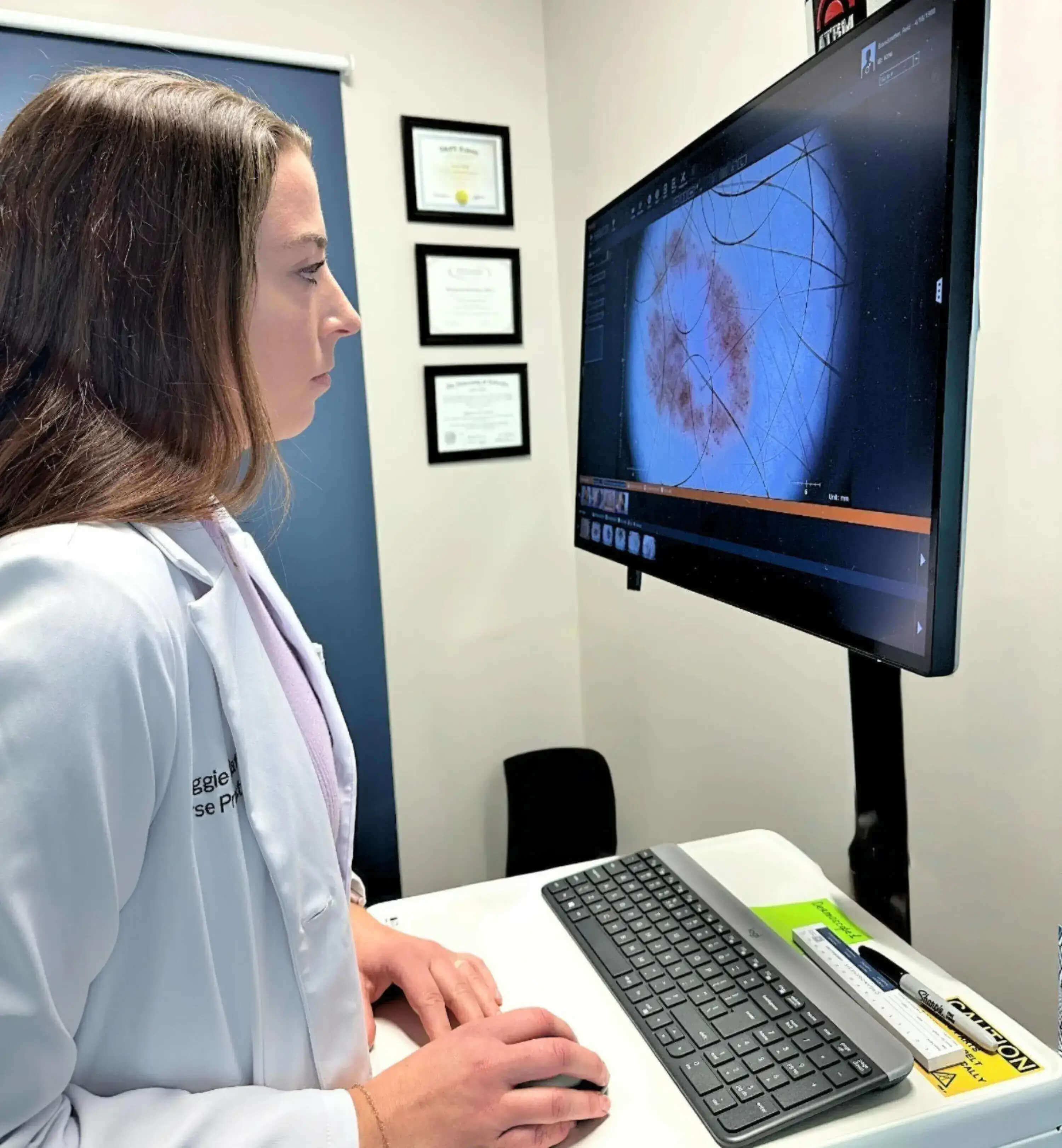
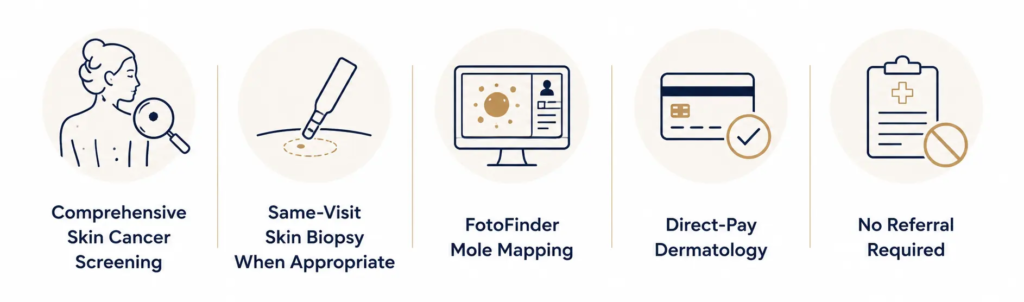
Maggie leads Elkhorn Dermatology’s skin-evaluation and screening services. She performs comprehensive skin examinations, digital dermoscopy, FotoFinder mole mapping, suspicious-lesion evaluations, and skin biopsies when clinically indicated. Her goal is to help patients understand their individual risk, recognize meaningful changes, and move forward with a clear care plan.
Clinical Director and Lead Dermatology Provider

A preventive skin cancer screening is designed for patients seeking early detection, individualized risk assessment, or ongoing surveillance. The examination may include a medical and family-history review, a systematic skin examination, dermoscopy of selected lesions, high-resolution documentation, and recommendations for monitoring or biopsy when appropriate. This option may be appropriate for patients with numerous moles, significant sun exposure, a personal or family history of skin cancer, previous atypical biopsy results, or concerns about changes that are difficult to track at home.
Choose the type of evaluation that best matches your concern. Patients do not need to determine whether a lesion is harmless, precancerous, or cancerous before scheduling
A full-body skin examination is a systematic evaluation of the skin from scalp to feet, including areas that may be difficult to inspect at home. The provider looks for visible signs of melanoma, basal cell carcinoma, squamous cell carcinoma, actinic keratoses, atypical moles, and other concerning lesions.
Dermoscopy and targeted photography may be used to examine or document selected spots. If a lesion requires additional evaluation, the provider will explain whether monitoring, biopsy, treatment, or referral is recommended.
Schedule a changing-mole evaluation when a mole has become larger, darker, lighter, more irregular, elevated, itchy, tender, bleeding, or noticeably different from surrounding moles. The assessment may include clinical examination, digital dermoscopy, comparison with prior images, and a recommendation for monitoring or biopsy.
A change does not automatically mean melanoma, but a lesion that is evolving deserves prompt professional evaluation.
This focused appointment is intended for a new, unusual, painful, crusting, bleeding, rapidly growing, or non-healing lesion. The provider examines the area, reviews relevant history, and determines whether it should be photographed, monitored, biopsied, treated, or referred.
Patients do not need to know what type of lesion they have before scheduling.
Ongoing surveillance is intended for patients with a previous skin cancer diagnosis, atypical moles, significant sun damage, immune-related risk factors, or other clinical reasons for periodic follow-up. The frequency and scope of future examinations are individualized.
Surveillance may include repeat full-body examinations, dermoscopy, targeted photography, mole mapping, and comparison with baseline images when available.
Treatment recommendations depend on the diagnosis, lesion type, location, size, depth, pathology findings, recurrence risk, medical history, and individual clinical circumstances. Some procedures are performed at Elkhorn Dermatology, while others require referral to a specialized surgeon or oncology team.
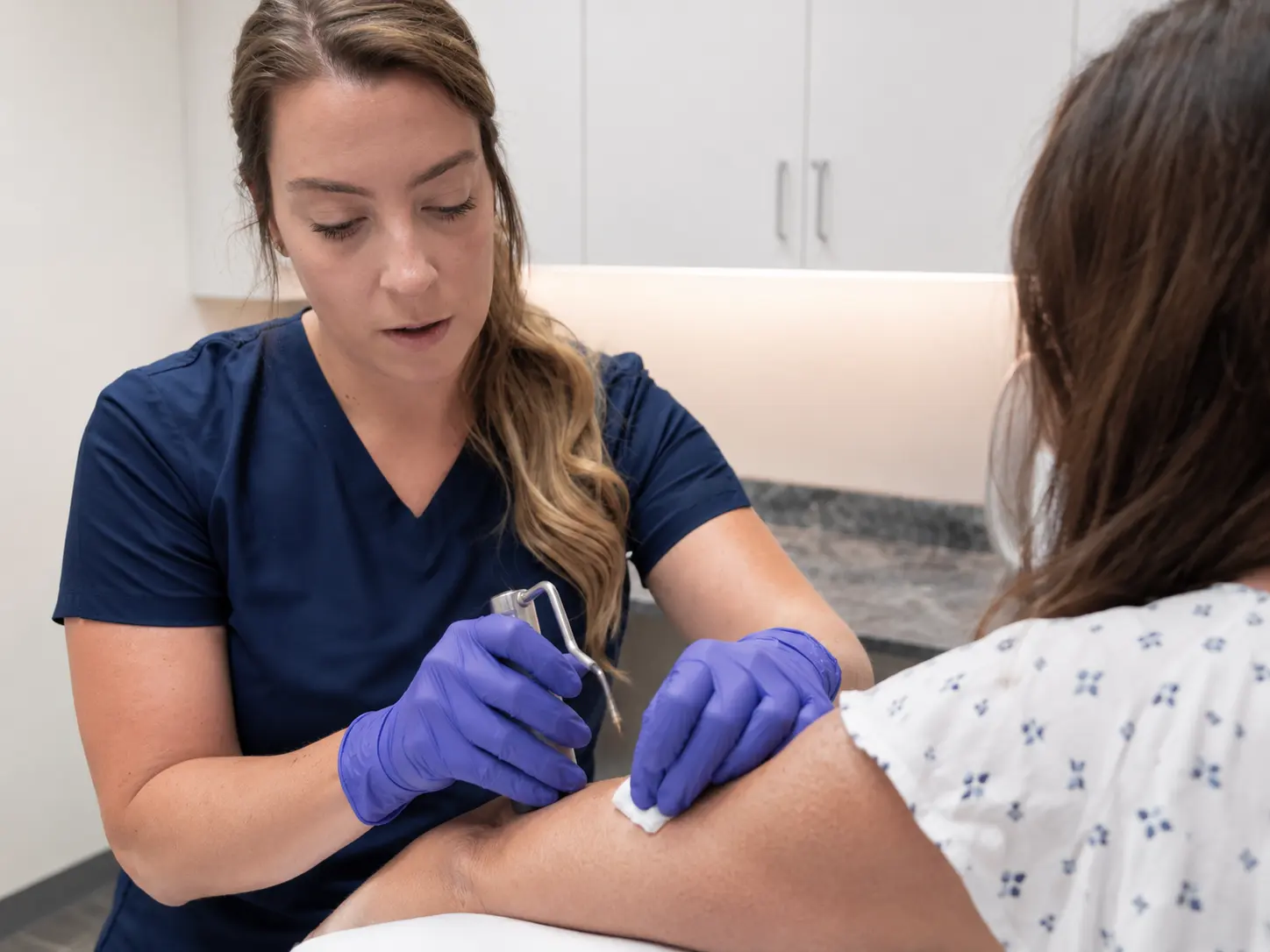
Recommended image: Sterile biopsy setup or provider preparing a specimen container; avoid graphic wound imagery.
A skin biopsy removes a small sample—or, in some cases, the entire visible lesion—for examination by a pathology laboratory. The biopsy method is selected based on the lesion’s appearance, location, size, and suspected diagnosis.
When clinically appropriate and sufficient appointment time is available, a biopsy may be completed during the same visit. The pathology laboratory processes the specimen and issues the diagnostic report separately.
Cryosurgery uses liquid nitrogen to freeze and destroy selected abnormal tissue. It may be appropriate for certain actinic keratoses and other lesions when the clinical diagnosis and treatment plan support its use.
Not every suspicious lesion should be frozen. A lesion that could represent skin cancer may require biopsy before treatment.
Electrodesiccation and curettage removes abnormal tissue using a curette and controlled electrodesiccation. It may be appropriate for selected superficial, low-risk skin cancers based on their type, size, location, and pathology findings.
The provider will explain why this treatment is—or is not—appropriate for a particular diagnosis.
Excision removes a diagnosed lesion together with an appropriate margin of surrounding tissue. Whether excision is suitable depends on the type of lesion, location, borders, pathology findings, clinical risk, and the provider’s assessment.
Lesions requiring more complex repair, specialized margin control, or treatment in a higher-acuity setting are referred appropriately.
Mohs micrographic surgery is a specialized procedure used for certain skin cancers. During the procedure, visible tumor and thin layers of surrounding tissue are removed and examined in stages. It may be recommended when tissue preservation and detailed margin control are especially important.
Elkhorn Dermatology coordinates referral to an appropriate Mohs surgeon when the diagnosis, location, recurrence risk, or other clinical factors support this approach.
Some melanomas and advanced nonmelanoma skin cancers require care from surgical oncology, medical oncology, radiation oncology, or other specialists. We help patients understand the recommendation, coordinate appropriate referral records, and continue dermatologic follow-up when indicated.
Treatment of advanced melanoma may involve surgery, immunotherapy, targeted therapy, radiation, or other specialist-directed care.
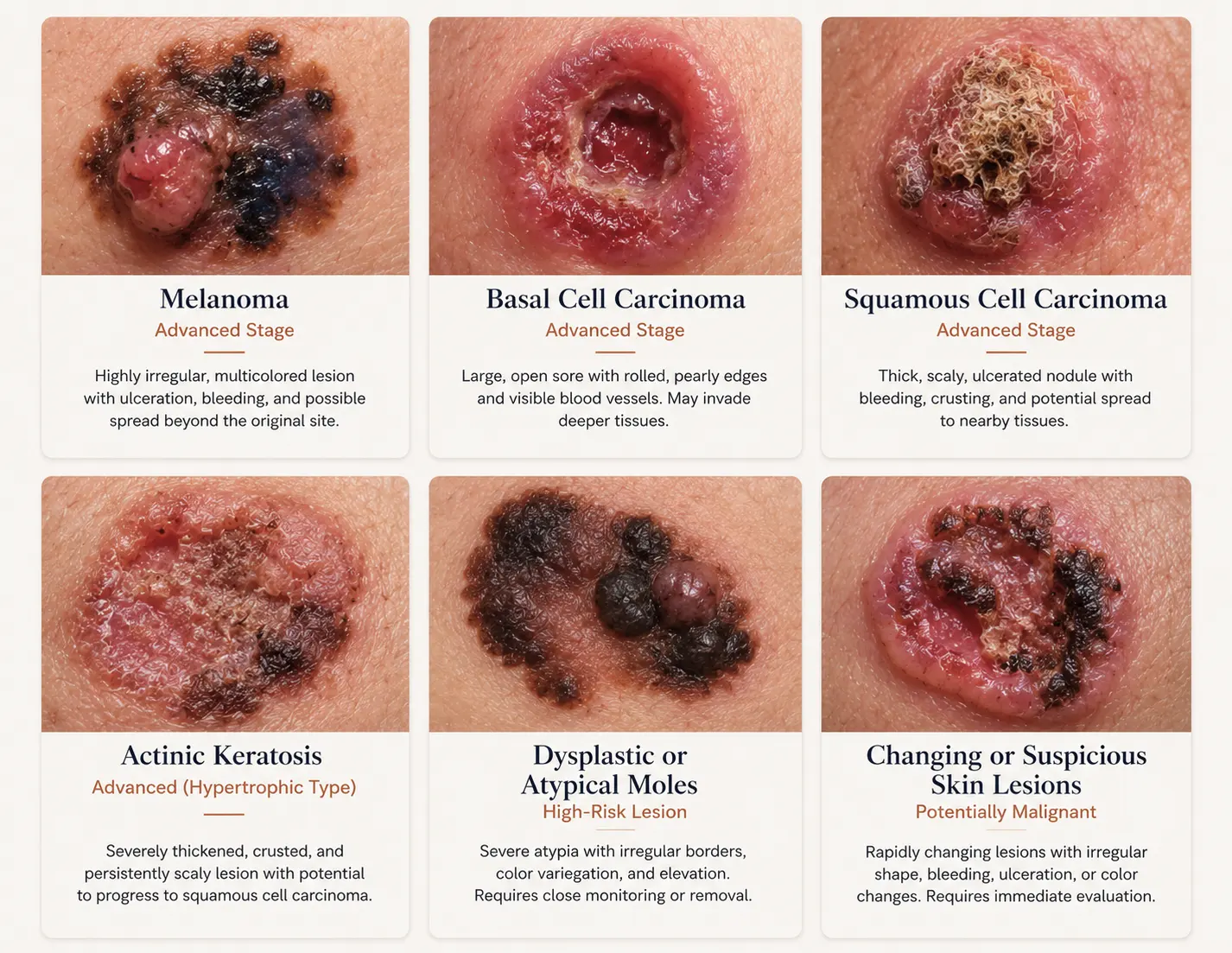
Skin cancer can appear in different forms, and many benign conditions can resemble concerning lesions. A professional examination—and sometimes a biopsy—is needed to determine the diagnosis. Basal cell carcinoma and squamous cell carcinoma are the two most common forms of skin cancer. Actinic keratosis is a sun-related lesion that may sometimes progress to squamous cell carcinoma, while melanoma is less common but more likely to invade nearby tissue or spread.
Melanoma develops in pigment-producing cells and may appear as a new spot or an existing mole that changes in size, shape, color, elevation, or sensation. Some melanomas do not follow the classic appearance of a dark mole, so any evolving or unusual lesion deserves evaluation.
Basal cell carcinoma often develops on sun-exposed skin. It may appear as a pearly or translucent bump, a pink patch, a scar-like area, or a sore that repeatedly crusts, bleeds, and does not fully heal.
Squamous cell carcinoma may appear as a firm red growth, a scaly or crusted patch, a tender lesion, or a sore that does not heal. Some lesions grow quickly or develop from areas of long-term sun damage.
Actinic keratoses are rough, scaly, or sandpaper-like areas caused by cumulative ultraviolet exposure. They are considered precancerous because some may develop into squamous cell carcinoma.
Atypical moles may be larger or more irregular than common moles and can have varied colors or indistinct borders. Most are not melanoma, but patients with atypical moles may require closer examination and individualized monitoring.
A lesion that is new, changing, bleeding, painful, crusting, growing rapidly, or not healing should be evaluated. Suspicious lesions can be pigmented or non-pigmented and may resemble benign growths.
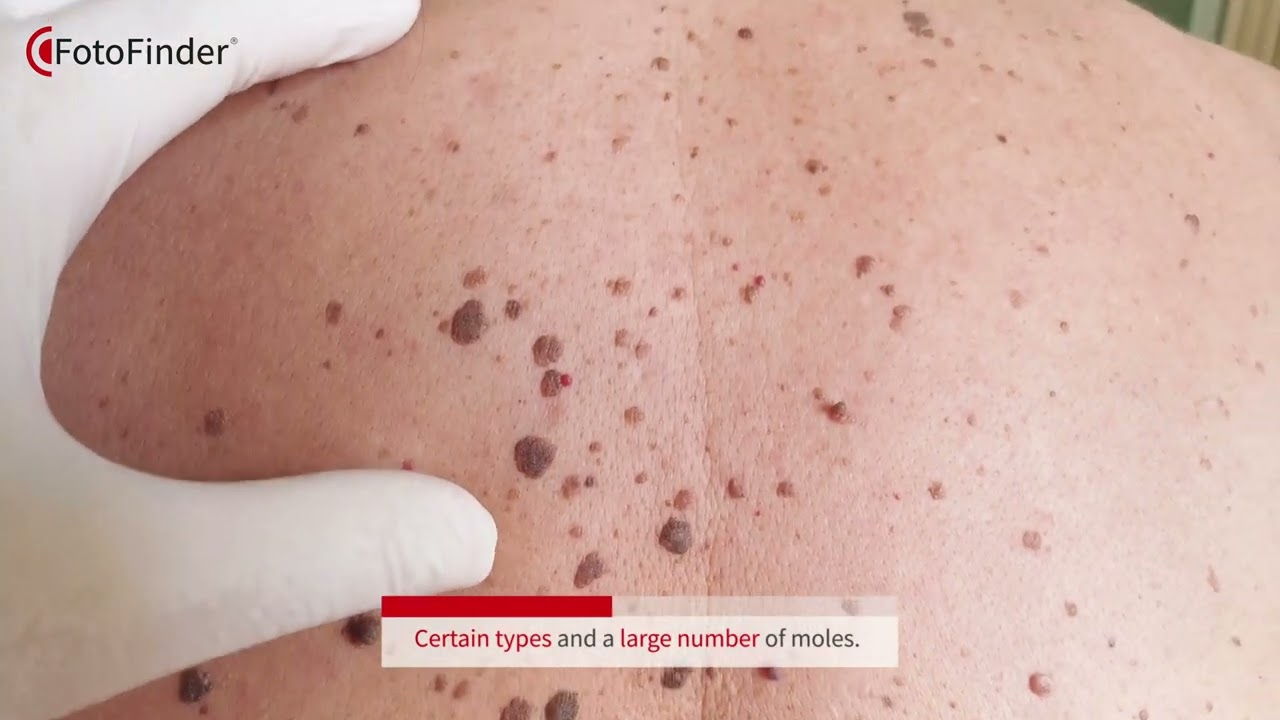
Skin changes can be difficult to recognize through memory or casual observation alone. Elkhorn Dermatology uses high-resolution dermoscopy, FotoFinder total-body photography, and digital mole monitoring to document selected lesions and compare them more consistently over time. These tools support, not replace, the provider’s clinical examination and judgment. They can be especially useful for patients with numerous moles, atypical lesions, previous skin cancer, or spots that require objective follow-up.
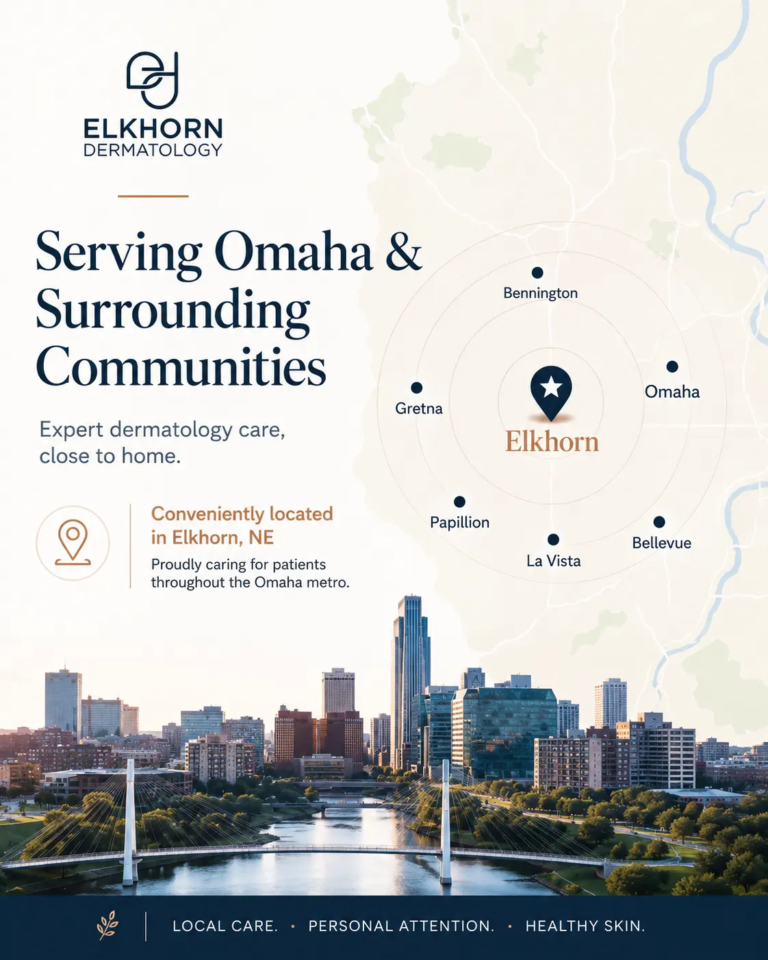
Elkhorn Dermatology is located in Omaha and welcomes patients from Elkhorn, West Omaha, Bennington, Gretna, Valley, Waterloo, Fremont, Millard, Papillion, La Vista, and surrounding Nebraska communities.
Patients visit our clinic for preventive skin cancer screening, full-body skin examinations, changing-mole evaluations, suspicious-lesion checks, skin biopsies, treatment of selected precancerous lesions, follow-up after skin cancer, and long-term surveillance. We also coordinate Mohs surgery and oncology referrals when specialized treatment is needed.
Elkhorn Dermatology is located in Omaha and welcomes patients from Elkhorn, West Omaha, Bennington, Gretna, Valley, Waterloo, Fremont, Millard, Papillion, La Vista, and surrounding Nebraska communities.
Patients visit our clinic for preventive skin cancer screening, full-body skin examinations, changing-mole evaluations, suspicious-lesion checks, skin biopsies, treatment of selected precancerous lesions, follow-up after skin cancer, and long-term surveillance. We also coordinate Mohs surgery and oncology referrals when specialized treatment is needed.
You do not need to know whether a spot is harmless, precancerous, or cancerous before scheduling an evaluation. If you have noticed a changing mole, a new or unusual growth, a bleeding or non-healing lesion, or another concerning skin change, our team can help determine the appropriate next step.
Schedule an appointment for

Discover more about Elkhorn Dermatology and our experienced providers, and learn why families throughout our community trust us for personalized, high-quality dermatologic care.
Monday – Friday:
10:00 AM – 6:00 PM
Elkhorn Dermatology is a physician-supervised dermatology clinic serving Omaha, Elkhorn, Gretna, Bennington, Waterloo, Valley, and surrounding Nebraska communities. We provide comprehensive skin cancer screenings, mole evaluations, medical dermatology for acne, rosacea, eczema, hair loss, nail disorders, rashes, and skin infections, as well as patch testing, wart removal, skin biopsies, and cosmetic dermatology services including scar treatment, wrinkle relaxer injections, IPL photofacials, TriBella™, microneedling, laser hair removal, and professional skincare.